
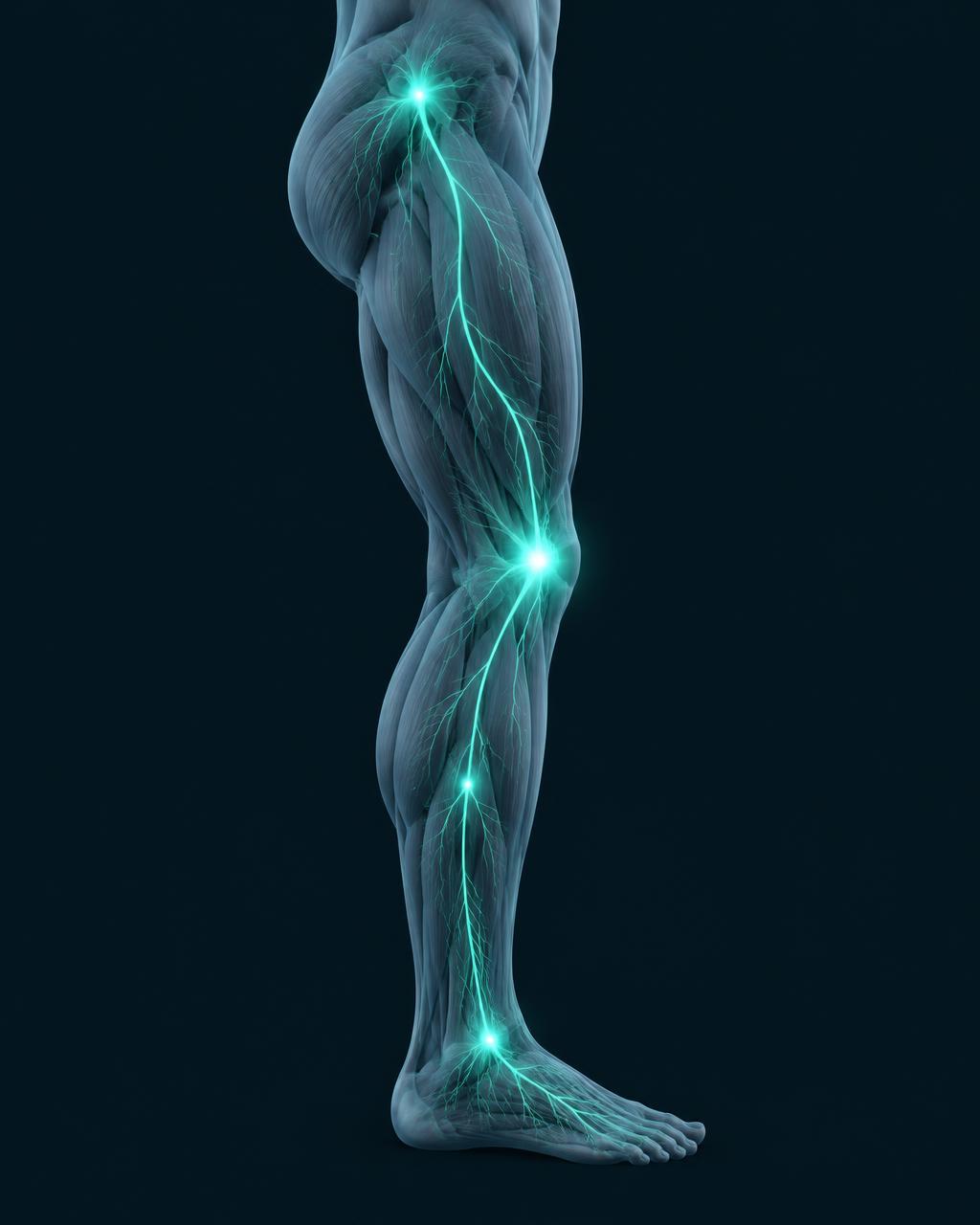
Knee
May also involve:
- Foot and ankle
- Calf
- Hip and pelvis
- Training load
The approach
Muscles, fascia, joints and connective tissues work together to produce movement and distribute force. Changes in one area can influence how another area works.
That does not mean every pain has a hidden cause elsewhere. It means the wider system is considered before deciding what matters.
A kinetic chain is simply a group of body areas working together during movement. When one area contributes less, another may take on more work. These adaptations are not automatically harmful, but they can be relevant when a problem keeps returning.
The bigger picture
Different areas. One connected body.
Here’s what a wider assessment might consider.
May also involve:
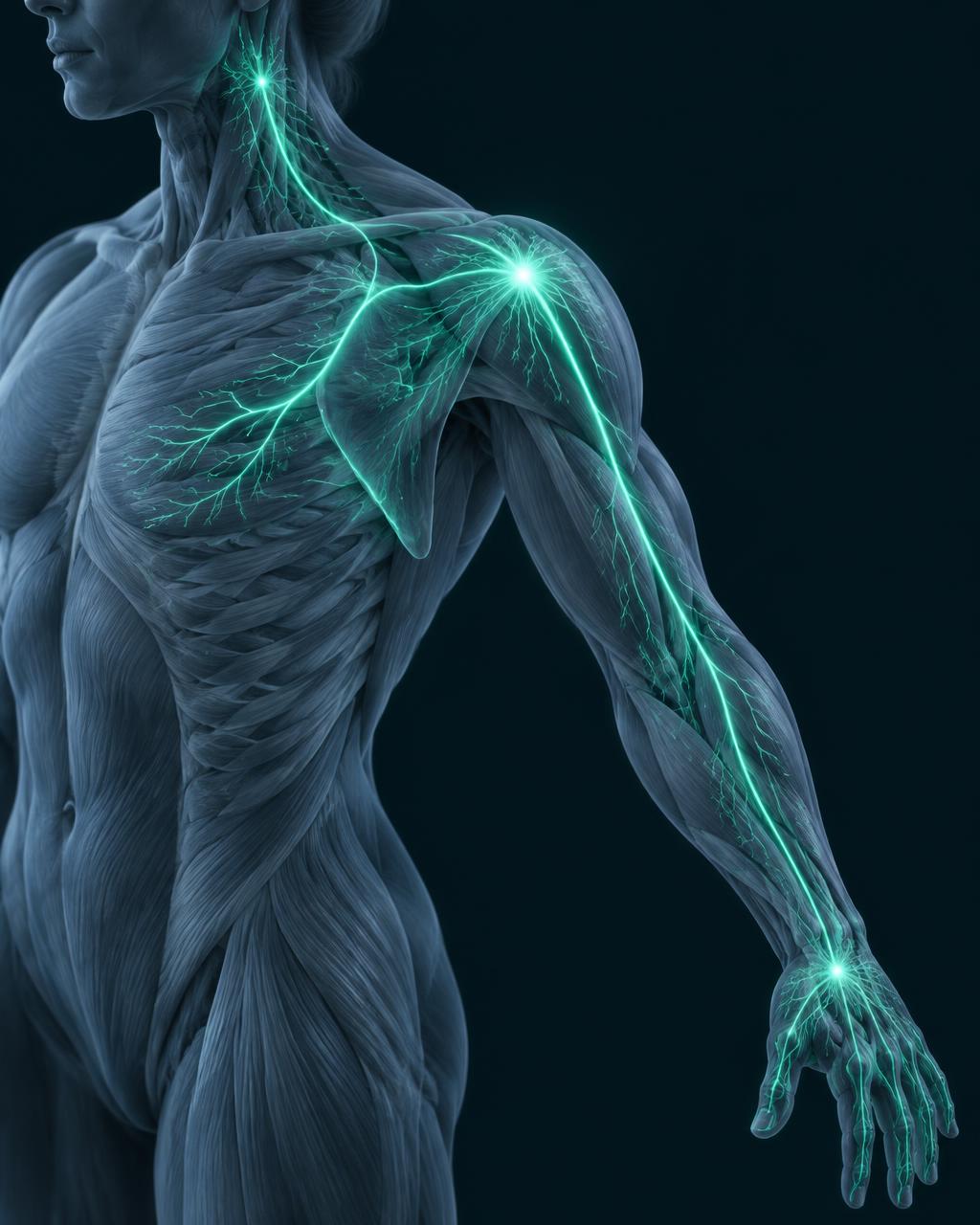
May also involve:
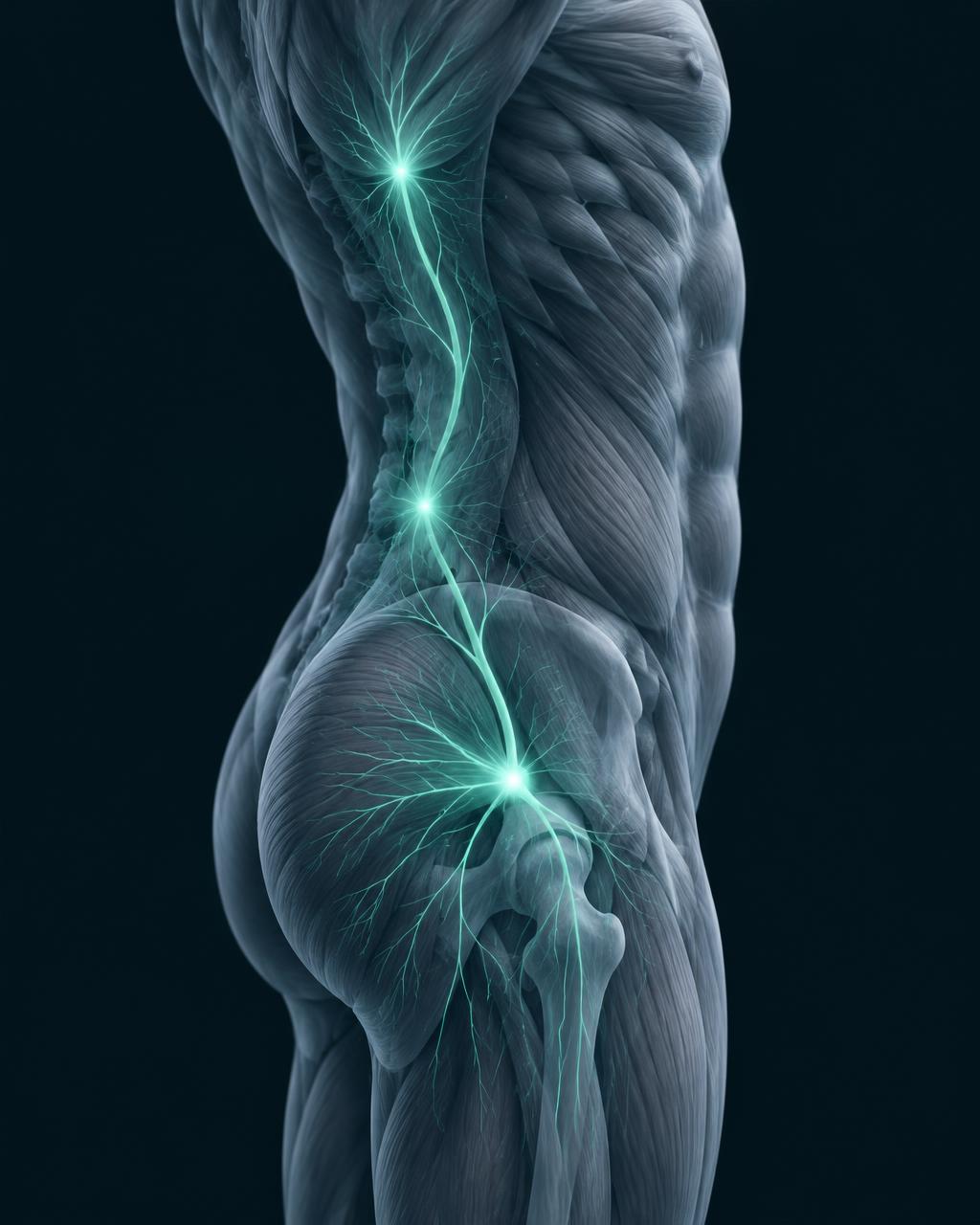
May also involve:
The aim is not to search for problems everywhere. It is to understand which factors are genuinely relevant to you.
Understanding the system
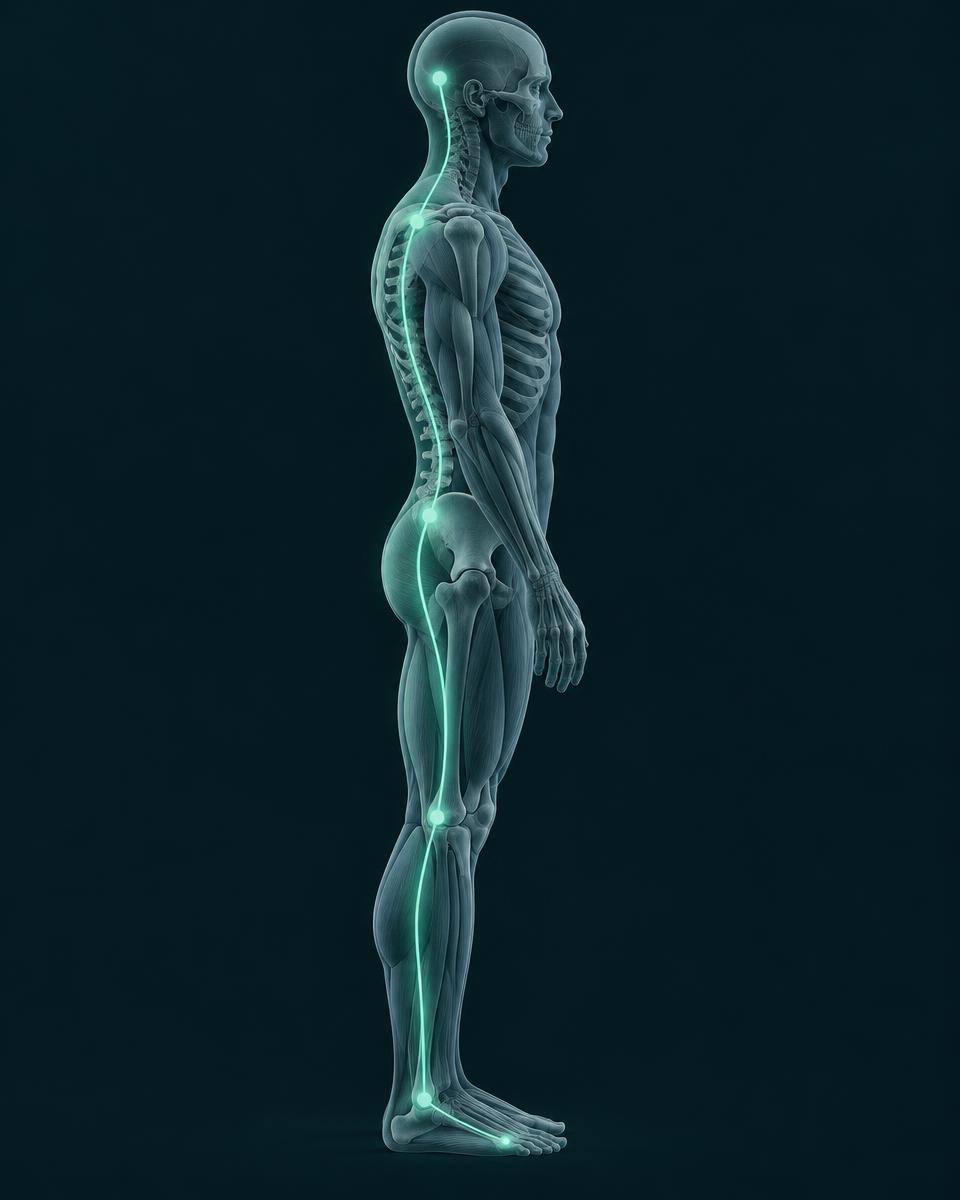
The body is not a collection of separate parts. Bones, muscles, fascia and connective tissues work together to distribute force and create movement. One way to understand this is through the concept of tensegrity.
When tension or load changes in one part of a connected system, other areas may adapt. This is an educational model, not a diagnosis or a complete explanation of pain. Assessment helps establish which factors may actually be relevant to you.
How you move, and how effectively different areas contribute to the task.
How your body manages the demands placed on it and adapts around restrictions.
Previous injuries, sitting, work demands and the activities that shape your day.
Exercise demands, recent changes in training and your opportunities to recover.
A clear plan forward
Understand the problem, your history and what you want to get back to.
Look at the painful area and other relevant areas and movements.
Use hands-on Neuromuscular Therapy and other techniques where appropriate.
Understand what is happening and build practical movement strategies.
Track change, adapt the plan and build longer-term improvement.
Education & partnership
You should leave an appointment knowing more than when you arrived: what may be contributing, what you can safely continue doing, what may need modified temporarily and what useful progress should look like.
The aim is not to make the body sound complicated. It is to make your situation easier to understand. We review progress together, adapting a realistic plan rather than creating dependency.
The goal is not more appointments. The goal is better progress.
Your next step
You do not need to know which treatment or technique may help. Start with an assessment. Together, we can work out what matters and what should happen next.