
01
Back Pain
Assessment may include your spine, hips, pelvis, trunk and movement, as well as work demands and previous injury. The focus is on understanding the factors relevant to your situation.
How I can help
01
Assessment may include your spine, hips, pelvis, trunk and movement, as well as work demands and previous injury. The focus is on understanding the factors relevant to your situation.
02
The neck and shoulder do not work alone. Assessment may consider the ribcage, thoracic spine, scapula, movement and desk or work demands.
03
The foot, ankle, calf, hip and pelvis all contribute to lower-limb movement. Strength, running and training load may be considered alongside the painful area.
04
Repeatedly treating a tight area without understanding why it is becoming overloaded may only give temporary relief. We consider what keeps returning and what may need to change.
05
For runners, GAA players, gym users, Hyrox athletes, cyclists, Irish dancers and recreational athletes managing physical problems or changing training demands.
06
For adults who want to remain active, mobile and physically capable as they get older. Care is guided by your goals, whether that means walking comfortably, exercising or moving more confidently.
Assessment also helps recognise when another healthcare professional may be better placed to help. New, severe or unexplained symptoms may need medical advice before hands-on treatment.
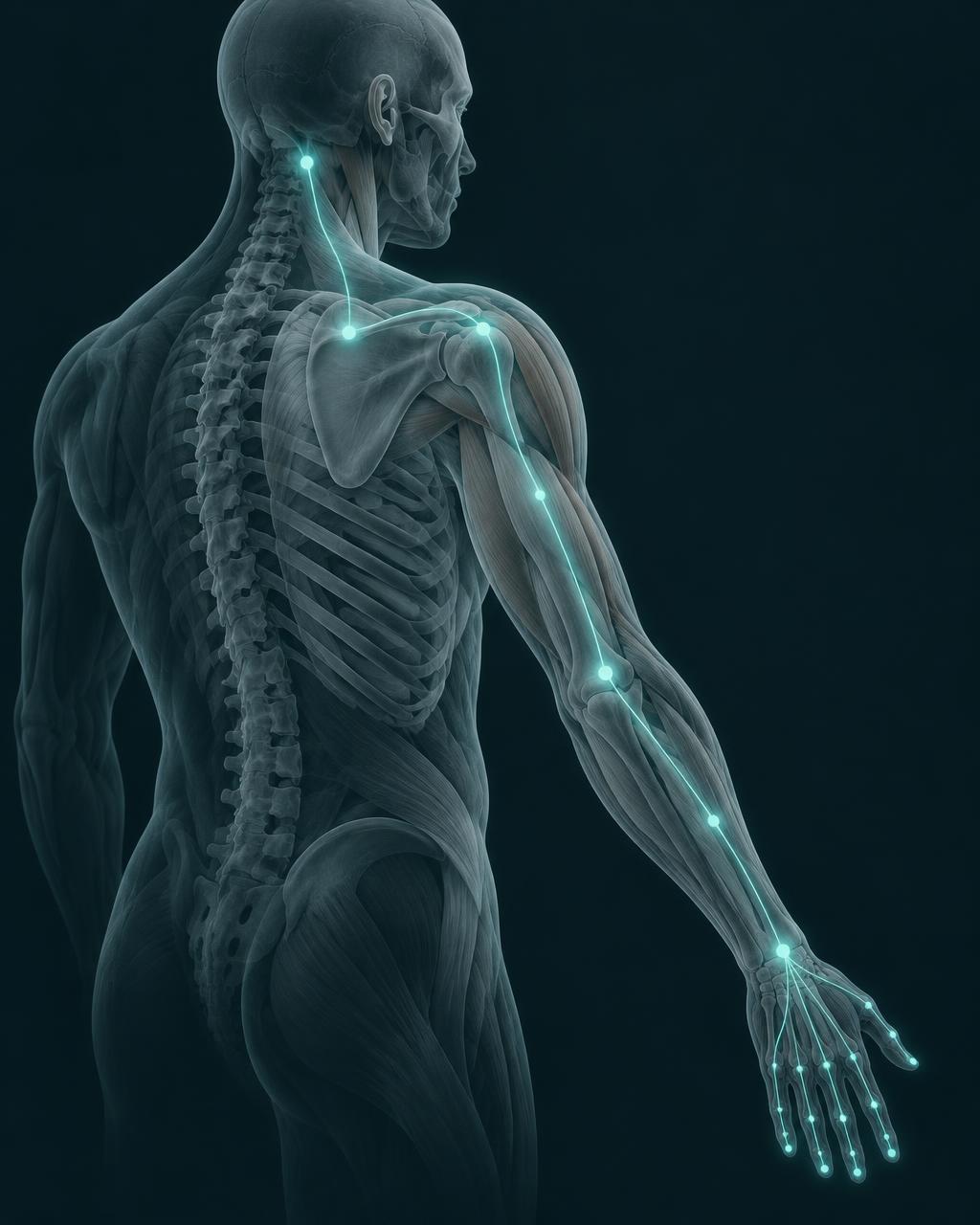
The connected upper body
Discomfort in one area often has contributors elsewhere. Assessment may consider how the neck, ribcage, shoulder blade and arm share the work of everyday movement — and what may need to change for the pattern to settle.
Your next step
You do not need to know which treatment or technique may help. Start with an assessment. Together, we can work out what matters and what should happen next.